
Responsible
Not So Hard.
What Is Responsible Tourism and Why Is It Important?
The word responsible is attached to a lot of things in society lately; responsible shopping, responsible brands, responsible business, responsible travel and so on. But, why are we being called to think about responsible living and how does this affect your travel plans?
The constant pressures to live a better life and be responsible and sustainable can be overwhelming. But, responsible tourism is actually a lot more simple and more wholesome than you would think. We’re going to delve into the main principles of responsible tourism, some examples, why it is important and how you can travel around Australia responsibly and easily.
ethical adventures are passionate about creating a community of travellers who advocate for responsible tourism, learning about communities and protecting the land for future generations. It is our hope that by the end of this article or a fun and engaging tour with us, you will carry this ethos in your heart, behaviours and conversations for years to come.
What is Responsible Tourism?
Responsible tourism is any tourism that cares for, respects and benefits the local communities. It can be defined as any form of responsible tourism in the industry that seeks to minimise negative impacts on social, economic and environmental resources and instead generates greater economic benefits for the local communities and people.
Responsible tourism involves being honest about the effects of tourism on the local community, culture and environment. It is not just the duty of the Government, it requires tour operators, tourists and community hosts to take responsibility for their individual impact on the destinations they visit and make choices that will reduce any negative impacts.
This can include supporting local businesses and communities that look to reduce mass tourism so they can provide more personable, ethical and meaningful experiences for both the tourists and the local people. It can involve supporting both attractions and cultural centres, using environmentally sustainable practices, respecting and protecting natural areas, promoting cultural heritage and educating tourists on responsible behaviour.
Ultimately, to promote responsible tourism is to treat any place you visit with as much respect, thought and care as you would want people to have for your home, local area and family.
What is the difference between responsible tourism and sustainable tourism?
Responsible tourism and sustainable tourism are often interchanged in conversations but are actually distinct concepts. The main difference is that sustainable tourism requires companies to take control of their impact on the environment. In contrast, responsible tourism holds both companies and individuals to take responsibility for their impact on both community and the environment.
While responsible tourism is focused on reducing negative impacts and maximising positive benefits, sustainable tourism is concerned with the long-term sustainability of the tourism industry as a whole. Both concepts are important for creating a tourism industry that is beneficial for all involved and that can continue to provide economic and social benefits while protecting the environment.
What does The UN World Tourism Organization do?
“Tourism that takes full account of its current and future economic, social and environmental impacts, addressing the needs of visitors, the industry, the environment and host communities”
As the leading international organization in the field of tourism, UNWTO promotes tourism as a driver of economic growth and focuses on long-term sustainability. They offer leadership, guidance and support to UN countries and advance tourism policies and regulations worldwide.
What is the Cape Town Declaration?
The Cape Town Declaration is known as the catalyst for the responsible tourism industry and what it is today.
In 2002, 280 representatives from 20 countries attended a Cape Town conference on responsible tourism in destinations as a side event preceding the World Summit on Sustainable Development in Johannesburg. A historic declaration of responsible tourism was agreed as follows:
- minimises negative economic, environmental and social impacts;
- generates greater economic benefits for local people and enhances the well-being of host communities, improves working conditions and access to the industry;
- involves local people in decisions that affect their lives and life changes;
- makes positive contributions to the conservation of natural and cultural heritage, to the maintenance of the world’s diversity;
- provides more enjoyable experiences for tourists through more meaningful connections with local people, and a greater understanding of local cultural, social and environmental issues;
- provide access for people with disabilities and the disadvantaged;
- is culturally sensitive, engenders respect between tourists and hosts and builds local pride and confidence.
Why is responsible tourism important?
- Fair economic growth
- Decisions are in the hands of the local communities and workers
- Minimise the negative impacts on the environment in their home
- Huge efforts to conserve natural heritage locations
- Minimise mass tourism to ensure their home is protected
- Spread an understanding of their local cultures, issues and challenges
- Nurtures respect between locals and visitors
- A deeper understanding of the natural heritage and cultural significance
- Reduces their negative impact on the environment and community
- Supports local communities
- Meaningful connections with locals you can’t get with mass tourism companies
- Authentic travel experiences knowing the decisions involved the local and traditional owners
- Protects the tourism industry for their own future generations
What are ethical adventures responsible practices?
ethical adventures main principle is to nurture a community of responsible tourists, to protect our beloved Northern Territory and the local communities and indigenous history. All the while, working closely with Parks Australia and other tour companies to advocate for the best environmental, social and economic practices.
Our main responsible practices include:
- Keeping our tours to small or private groups – Allowing only a maximum of 10 guests allows us to have minimal impact on the diverse land and communities but maximum impact on our guest’s experience.
- Educating our guests – All of our tours are run by knowledgeable and qualified, local, eco-tour guides who want our guests to become part of our responsible tourism community.
- Respecting sacred Indigenous sites – We have permission to visit every Aboriginal site we visit and we do not allow photographs or videos in sacred and restricted places.
- Environmental Advocates – We attend meetings with Parks Australia to advocate for sustainable environmental practices and conservation efforts.
- Connect with the land – All of our tours connect with the landscape, natural habitats, wildlife and fauna and flora to spread knowledge of how we can work together to protect.
- Connect with the community – We work to ensure our tours visit community-run experiences, galleries and talks to provide economic benefits and enrich the experience for our guests.
- Minimise our waste – We strive to leave minimal waste in all of our business aspects which includes providing homemade plastic-free food for our guests and water refills onboard our van.
- Encourage local food – Some of our tours are designed to ensure our guests eat in local establishments, have cultural food experience and provide an economic contribution to the locals.
- Great working conditions – We employ staff from our local communities and ensure fair wages and working conditions at all times.
- Maintain transparent and ethical business practices – We strive to be 100% transparent about our business and continually educate ourselves to improve our ethical tourism goals.
How can you be a responsible tourist in Australia?
Australia is home to the oldest, continually surviving cultures in the world so it goes without saying that responsible tourism is incredibly important to protect this living cultural heritage. Responsible tourism is about enriching the travel experience for both locals and tourists and you can absolutely travel responsibly in Australia by:
Avoid taking natural souvenirs
It can be so tempting to want to take part of the land or historic artefact to forever remember your trip. It’s important to remember that it is not ethical or sustainable to remove a natural resource. Not only could the missing resource affect the natural ecosystem, it can also have a negative impact on the ecosystem you take it home to.
Stay several nights
Day trips are great for packing in local knowledge and cultural experiences. However, you will have an enhanced experience and a more positive impact on the local economy if you stay several nights and fully immerse yourself in local establishments.
Support the local economy
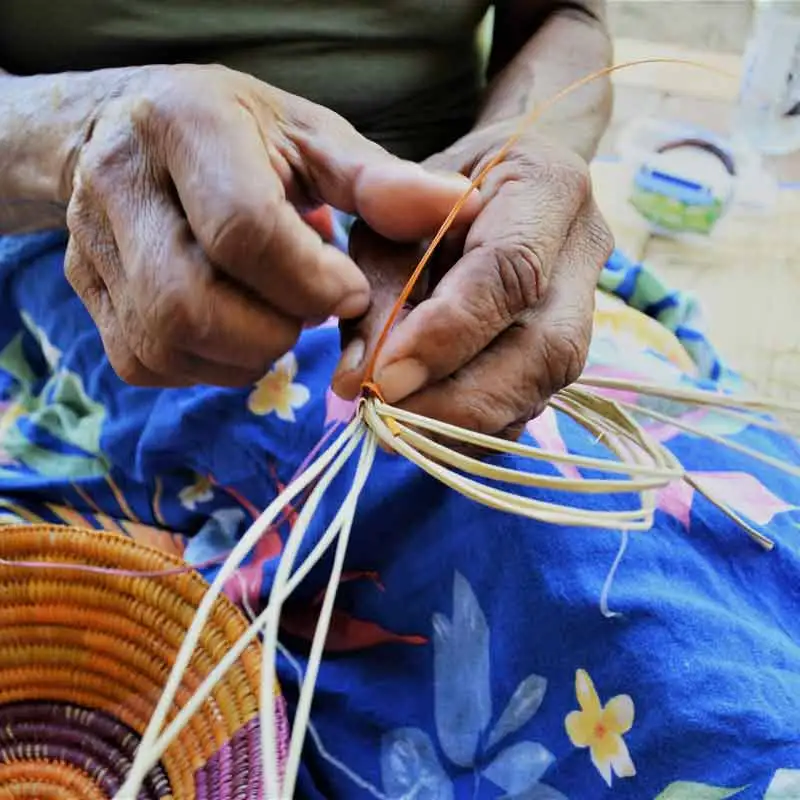
Research and pick an eco-travel company that fights to support the local communities, dine in local restaurants and visit community-run experiences. Ensure you buy souvenirs or artwork from 100% community-owned centres and don’t give money to big corporations which may disadvantage the workers.
Respect Aboriginal sacred sites
Be careful not to damage any Aboriginal rock art sites or sacred locations. Most areas owned by the traditional owners may be open to the public but with signs advising no photography areas. These are areas of high significance and you are asked as a responsible tourist to acknowledge you are invited as a visitor and to follow their cultural rules.
Minimise your waste
Triple-check your area before leaving to ensure you don’t forget any trash or foreign objects that could negatively impact the environment, wildlife and locals.
Explore non-popular areas
Try to get off the beaten track, visit hidden gems and spread the love for rural tourism!
Become a temporary local
The best way to immerse yourself into the local area and enrich your travel experience is to act like a temporary local, not a tourist, by:
- Educate yourself about local customs and culture so you can show respect and build that bond between travellers and locals.
- Respect religious and cultural beliefs, adhere to rules and dress codes.
- If you do find yourself wanting to capture the perfect tourist photo, always ask permission if you are capturing locals.
- Try to speak some sentences in the local language to build trust and respect for the tourism industry.
Join small tour groups
A smaller group will have less impact on the natural environment and community and give you more opportunity to learn.
FAQs
How do you promote responsible tourism?
The success of the responsible tourism industry relies on nurturing a community and spreading the message. You can promote the benefits by:
- Continually educating yourself about the new challenges and destination management
- Visiting less popular destinations to promote travel there
- Investing in sustainable travel gear to reduce single-use waste in destinations
- Get involved with communities to build trust
- Share your experiences
How do you show respect for Aboriginal culture when travelling?
- Research the traditional land name and culture before visiting
- Visit local community ran organisations, galleries and companies and try to buy direct from the community
- Think before you photograph. Is there a sign asking you not to? Have you asked the Aboriginal community for permission if they are in your shot?
- Participate in cultural experiences to learn first-hand and pay respect to the land you are on
- Speak the language in the area you visit
Can you travel the Northern Territory responsibly?
The Northern Territory is a diverse landscape in which natural ecosystems thrive in a variety of conditions and wildlife, communities and historic and modern ways of living all survive the outback together. Responsible tourism is, in our opinion, the only way we can protect this beautiful area for longer.
Join ethical adventures on a day trip or multi-day tour from Darwin and discover the magic of the Top End and become part of our responsible travel community.